





Commitments to Renewing Life
For planet
Conserve Biodiversity
43 %
Habitat fragmentation is a primary threat to biodiversity loss in Brazil and globally. It happens when large, continuous natural areas of ecological importance are broken into smaller, isolated patches. This process is mainly driven by human activities that alter land use and occupation.
Fragmentation changes ecological interactions across the landscape, isolates species, and reduces genetic diversity and reproductive success. This heightens species vulnerability and may lead to extinction, disrupts the resilience of territories to climate change, and hampers ecosystem services, among other negative impacts.
Degradation and loss of these ecosystem services threaten the business by lowering forest productivity, raising operational costs, and increasing vulnerability to pests and diseases. They also create transition risks, such as the need to comply with new environmental regulations. Protecting healthy landscapes is crucial for ensuring Suzano's long-term resilience and competitiveness.
Suzano's forestry operations span approximately 2.9 million hectares, with over 1.1 million designated as protected areas, including legal reserves and APP. Given the urgent issue of biodiversity loss and our expertise in forest management, we play a crucial role in conserving biodiversity. We focus on connecting isolated habitat fragments to enhance biodiversity across our biomes, thereby creating value for the business.
Following the 2025 review of the Sustainability Strategy, we reassessed our approach to focus more intensely on areas with the highest potential for impact. In this context, we incorporated the STAR (Species Threat Abatement and Restoration) metric into the Biodiversity Commitment to enhance the effectiveness of our actions and prioritize efforts. STAR, a key metric within the IUCN RHINO (Rapid High-Integrity Nature-positive Outcomes) framework, is a science-based, action-oriented approach developed by IUCN. It provides a pathway for companies, governments, and civil society to achieve rapid, positive, high-integrity outcomes for nature, supporting the Kunming-Montreal Global Biodiversity Framework (KM-GBF) and the Sustainable Development Goals (SDGs). Its primary focus is on reducing risks of species extinction and ecosystem collapse. Using data from the IUCN Red List, STAR helps quantify and prioritize opportunities for action by identifying where threat mitigation and restoration efforts will have the greatest impact, guiding the development of targeted action plans in specific territories.
Information
ScopeThe commitment includes fragments of natural forests and other types of native vegetation selected for their high biodiversity conservation potential. These fragments are situated both inside and outside the company's territories. To connect them, ecological corridors will be established across Suzano's operations and supply chain, as well as private lands, settlements, and territories of traditional populations, through strategic partnerships.
These corridors are implemented in conservation zones through restoration methods and in productive areas, using sustainable production models.
By 2025, STAR will steer the action plans across various lines of action, primarily aiming to lower the extinction risk of priority species¹ by mitigating the prioritized threats.
Furthermore, the CPRV's Biodiversity action lines have been streamlined and consolidated from six to three main areas.
- Implementing ecological corridors by linking native vegetation fragments through restoration and sustainable production systems, which enhance the restoration process and generate income in the territory;
- Protecting connected areas: creating a set of protected areas within the corridors' territories will help safeguard the connected regions by maintaining ecological corridors;
- Reduce the risk of extinction for threatened species: Monitor and protect the 19 species identified by STAR¹ by implementing science-based action plans to address key threats and lower their risk extinction.
The main threats guiding the action plans include hunting and gathering of terrestrial animals; cultivation of annual and perennial non-timber crops; logging and timber harvesting; fires; livestock and extensive animal husbandry; forest plantations for timber and pulp; and the development of roads and railroads.
Connect half a million hectares of priority areas for biodiversity conservation in the Cerrado, Atlantic Forest and Amazon by 2030.
In 2025, we established sections of ecological corridors that connected 55,366 hectares of fragments. When combined with previous years' connections, the total connected area reaches 214,368 hectares. This effort involved planting 584 hectares of ecological corridor zones, including 256 hectares dedicated to sustainable production models and 328 hectares for ecological restoration.
In partnership with Inovaland, the Atlantic Forest corridor's implementation partner, we advanced territorial engagement at the Fábio Santos Settlement (AAVC Alcoprado) in Teixeira de Freitas (BA). This settlement, organized by MST, has housed around 96 families since 2014. After analyzing satellite images to assess connectivity potential, we held an initial meeting with local leaders, visited areas suitable for restoration, and developed the budget and activity plan in collaboration with the Popular Agroecological Work Cooperative (COOTAP). This effort strengthened community involvement for territorial projects. We restored 103 hectares of ecological zones, linking 1,792 hectares of fragments, thus enhancing landscape connectivity and conservation prospects. This highlights the area's importance for species conservation per STAR, including four of the nine species highlighted by the STAR metric: Brown howler monkey (Alouatta guariba); Cinnamon-tailed scoter (Glaucis dohrnii); White-eared thiririba (Pyrrhura leucotis); and Crested capuchin monkey (Sapajus robustus).
Additionally, within the Atlantic Forest corridor and in collaboration with Inovaland, we advanced efforts to establish a section of the corridor in quilombola territory, specifically in the Ribeirão Community. In this area, 8 hectares of ecological restoration were carried out, linking 7,457 hectares of fragmented habitats. This effort supports the strategy of focusing on priority landscapes and engaging with key communities, helping the company promote conservation and restoration initiatives in the region.
We officially established the RPPN Nova Descoberta, the largest Private Natural Heritage Reserve in Maranhão and Suzano's biggest Conservation Unit, with support from the Ecofuturo Institute. Spanning approximately 5,800 hectares across Açailândia, Bom Jardim, and Itinga (MA), this area has high ecological significance due to its location in a transition zone between the Cerrado and the Amazon. It plays a strategic role in safeguarding threatened ecosystems and is part of the Amazon Corridor within the CPRV Biodiversity, emphasizing the need for urgent environmental protection and restoration efforts in a region affected by the Arc of Deforestation.
We also advanced in developing a section of the corridor within Suzano's land, which previously contained only eucalyptus trees. This area now forms part of the corridor that links the RPPN Nova Descoberta to another fragment in the landscape. In this segment, 19 hectares have been restored ecologically, thereby connecting 9,564 hectares of fragmented habitats. This enhances landscape connectivity and bolsters the protection of these connected areas. As a result of this effort and the newly established link, the RPPN Nova Descoberta has become part of the Gurupi Mosaic, promoting integrated landscape management through Suzano's collaboration with the Ecofuturo Institute in the region.
| 2020 | 2021 | 2022(*²) | 2023(*²) | 2024(*²) | 2025 | Cumulative total | |
|---|---|---|---|---|---|---|---|
|
Connected areas |
0.00 |
0.00 |
478.70 |
56,422. 70 |
102,100. 00 |
55,366. 00 |
214,367. 40 |
| Implemented areas (ha)³ | Inside Suzano | Outside Suzano | Total | ||||
| Year | Productive areas (ha) | Protected areas (ha) | Productive areas (ha) | Protected areas (ha) | |||
|
2022 |
93.50 |
178.80 |
0.00 |
0.00 |
272.30 | ||
|
2023 |
102.80 |
299.30 |
0.00 |
0.00 |
402.10 | ||
|
2024 |
740.10 |
327.80 |
3.10 |
46.80 |
1,117. 80 | ||
|
2025 |
256.10 |
159.80 |
0.00 |
168.70 |
584.60 | ||
|
Total: |
1192.50 |
965.80 |
3.10 |
215.40 |
2,376. 90 | ||
In 2026, we will persist in developing ecological corridors by establishing ecological restoration zones and practicing sustainable management both within and outside Suzano's farms. This effort will connect native vegetation fragments and reinforce the restoration chain, enabling large-scale corridor implementation.
In the domain of protecting interconnected areas, we will guarantee that the areas linked by corridors are equipped with protection measures appropriate to the local context, including enhancing opportunities to establish reserves and other protective arrangements on Suzano and third-party properties within the priority territories.
To reduce the risk of extinction for endangered species, we will progressively develop and implement action plans that target the primary threats to biodiversity relative to the baseline. Additionally, we aim to enhance methods for assessing the relative abundance of species prioritized by STAR, by integrating monitoring data and scientific evidence to support decision-making in the field.
To ensure these fronts remain viable, we will maintain collaborative efforts and engage various stakeholders across the landscape. Our focus will remain on forming strategic partnerships to bolster existing projects within the territory, support internal initiatives, and, when no ready solution exists, co-create new projects with local institutions, organizations, and experts.
- The 19 priority species identified by STAR are: Alouatta guariba (Brown howler monkey), Ameivula nativo (Linhares lizard), Bachia bresslaui (Cerrado pawless lizard), Cebus kaapori (White-faced monkey), Chaetomys subspinosus (Black hedgehog), Chiropotes satanas (Cuxiú-preto), Crax blumenbachii (Mutum-do-sudeste), Crax fasciolata (Mutum-de-penacho), Glaucis dohrnii (Balança-rabo-canela), Harpia harpyja (Gavião-real), Leopardus tigrinus, Pionus reichenowi, Priodontes maximus, Psophia obscura, Pyrrhura cruentata, Pyrrhura leucotis, Sapajus cay, Sapajus robustus, and Urubitinga coronata.
- The figures for 2022, 2023, and 2024 have been revised to reflect updated fragment areas, derived from more precise satellite images.
- Implemented areas denote regions where ecological restoration or sustainable management practices have been applied to establish connectivity among the native forest fragments mapped for the biodiversity corridor.

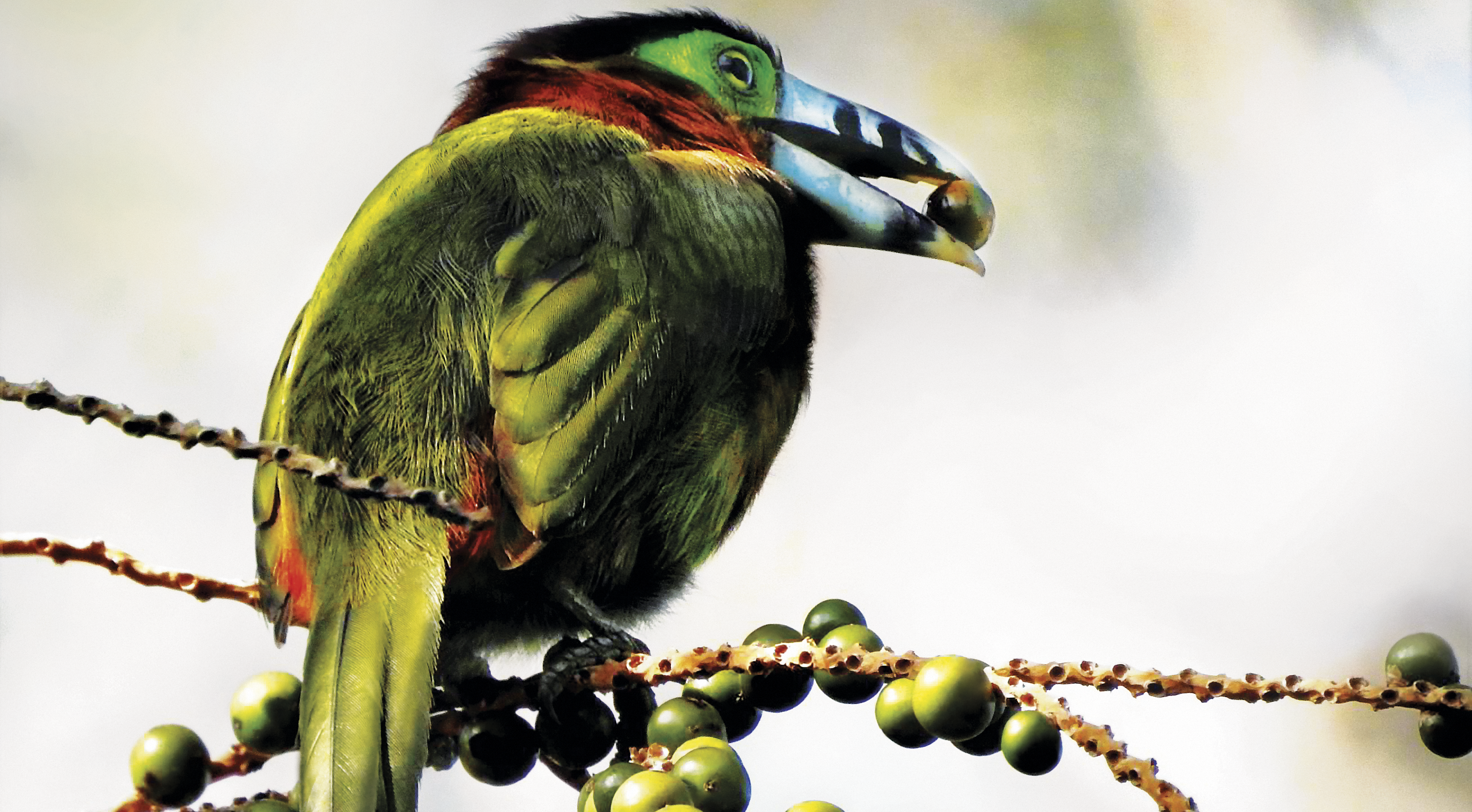
Conserve Biodiversity
Connect half a million hectares of priority areas for biodiversity conservation in the Cerrado, Atlantic Forest, and Amazon.

Discover our targets to combat the climate crisis
Remove 40 million tons of carbon from the atmosphere by 2025...

Offer renewable products
Make available 10 million tons of renewable-source products that can replace plastic and other petroleum-based products by 2030.

Taking care of the water
Increase water availability in all the critical watersheds¹ in Suzano's areas of operation by 2030 and reduce by 15% the water captured in our industrial operations...