



Commitments to Renewing Life
For people
Decrease poverty
71 %
The 2025 Synthesis of Social Indicators¹, published by the Brazilian Institute of Geography and Statistics (IBGE), reports that Brazil has achieved its lowest poverty level since the series started in 2012. Despite this progress, approximately 23.1% of the population still lives in poverty, down from 23.4% the previous year, representing about 8.6 million fewer people.
Despite this positive environment, Suzano believes it plays a crucial role not only in supporting economic growth but also in driving social change across the more than 220 Brazilian municipalities where it operates. Therefore, in collaboration with civil society organizations and local stakeholders, we develop income generation initiatives and work to influence public policies. Our goal is to strengthen sustainable local businesses that reflect each region's unique culture.
We adopt the global monetary poverty reference established by the World Bank and endorsed by IBGE, set at 6.85 dollars per day or 665 reais per month, per capita family income (2025). The calculation considers the average monthly income, defined as the total income from work and other sources of household residents, divided by the number of residents.
Information
ScopeThe commitment aims to broaden our income-generation programs to help people rise above the poverty line, taking socioeconomic vulnerability into account in each region. By 2025, Suzano recognizes education as a key tool for reducing poverty and inequality, evolving its approach to include productive opportunities for young people and to promote access to employment for those under 24. We now evaluate the impact of projects on young people's productive inclusion, contributing significantly to educational development. The CPRV is addressing two dimensions of this multidimensional issue. With this addition, the expansion of Professional and Technological Education (EPT) and bolstering young people's productive inclusion complement our income strategies in tackling poverty.
Suzano's social investment acts as a strategic tool to create value for the business, its value chain, and the local communities in its operational regions, while also ensuring stakeholder engagement.
The action emphasizes solutions that directly impact poverty reduction financially, while also indirectly addressing its broader aspects such as health and education. These solutions can be replicated and expanded across different municipalities. The projects are organized into six programmatic lines³ that consider regional features and their socio-economic focuses.
- Sustainable extractivism: aims to empower extractive groups by adding value to sustainable products and connecting them to national and global markets.
- Inclusive recycling seeks to strengthen recycling cooperatives and their regional networks, increasing material collection and raising the income of waste pickers.
- Entrepreneurship: focuses on investments to stimulate entrepreneurship, mainly supporting women and young people in starting and running businesses.
- Territorial Supply Networks: intends to connect rural family producers with the consumer market to enhance food security, agriculture, and livestock farming in the regions.
- Access to Employment: promotes training, professional development, and networking for access to formal employment.
- Suzano Value Chain: encourages the incorporation of social vulnerability considerations into both direct and indirect hiring processes throughout Suzano and its value chain.
Contribute to lifting 200,000 people above the poverty line in the jurisdictions where the company operates in Brazil by 2030.
In 2025, the collaborative efforts of Suzano, its partners, and its value chain facilitated a significant quantitative achievement in their commitment to poverty alleviation. Specifically, we contributed to lifting 44,344 people out of poverty, maintaining a higher level than in 2024, when 40,000 people were reached. Consequently, the cumulative total of individuals supported through this initiative reached 141,686 between 2020 and 2025.
Over the course of the year, we backed 44 initiatives from civil society organizations aligned with our six programmatic lines, reaching more than 102,000 new people across eight Brazilian states. This demonstrates our dedication to diversity and inclusion, with 64% of participants identifying as women and 70% as Black or pardo in the last cycle. Overall, we have impacted more than 260,000 people since 2020.
In 2025, we allocated approximately BRL 20 million of our own resources to the projects and reinforced our strategy of partnerships and co-investments, which are essential for expanding the scale and sustainability of income-generating initiatives. This action enabled us to attract an additional BRL 60 million, with commitments signed through 2028, further strengthening our ability to drive social transformation. Notable partners include the BNDES (National Bank for Economic and Social Development), the Coca-Cola Brazil Institute, and organizations from the S System—SENAI, SEBRAE, SENAR, among others.
The expressive results observed in 2025 stem from the investment cycle that started in 2022, considering the two to three years needed for projects to develop and produce results. Since 2020, Suzano has invested approximately BRL 125 million in poverty-reduction efforts, achieving consistent efficiency gains, as evidenced by lower average costs per person above the poverty line. By 2025, we reached 70% of our 2030 target and exceeded our planned results for the period by 179%, reaffirming our commitment to tangible results and social impact. These progress milestones were only attainable thanks to our network of civil society organizations, which designed the methodology, implemented initiatives, and meticulously measured outcomes. Learn more about “Private Social Investment Management” and “Suzano's Social Programs”.
Value Chain
By prioritizing hiring people in vulnerable situations, either for company roles or indirectly through suppliers, we have maintained consistent poverty-reduction results across our value chain compared to previous years. In 2025, 4,342 people rose above the poverty line due to new job opportunities created for family members of our service providers or at Suzano itself. Since 2022, out of 141,000 people previously in poverty, 18,000 have escaped this condition thanks to initiatives within our Value Chain.
Productive Inclusion
In 2025, we commenced evaluating the outcomes associated with integrating young people aged 24 or younger into the workforce or vocational education programs. A total of 10,991 young people achieved one or both milestones through projects supported by the company.
In addition to the structured set of criteria for prioritizing our social investment listed below, we can highlight that, in 2025, we opted to expand and renew projects and partnerships with organizations that had been successful in previous years in meeting the result expectations.
Main criteria:
- Previous experience and success in similar projects: a key element in assembling the 2025 project portfolio, reducing the learning curve, and enabling those who have not previously surpassed the poverty line to continue receiving support throughout the year;
- Project maturity: We identified projects that are yet to start and those in progress seeking additional investment, prioritizing initiatives with the greatest potential for implementation and impact;
- Potential impact: We evaluated the total number of beneficiaries and the effect on lifting people out of poverty, assigning specific scores to highlight initiatives with the highest potential for social change;
- Efficiency in financial resource use: We thoroughly analyzed the cost per beneficiary, focusing on projects that utilize resources in the most strategic and effective way;
- Strengthening partnerships: We consider the presence of co-financing partners, assessing available resources and the proportion of matching funds, promoting more balanced and stronger collaborations;
- Mobilizing the target audience: We assessed the engagement level of the intended audience, prioritizing projects based on solid data and those with an identified, registered, and mobilized audience to ensure more precise and effective execution.
| 2020 | 2021 | 2022 | 2023 | 2024 | 2025 | Cumulative Total | |
|---|---|---|---|---|---|---|---|
| overall number | overall number | overall number | overall number | overall number | overall number | overall number | |
|
Number of people lifted off the poverty line |
2,285 |
9,007 |
18,341 |
22,250 |
45,459 |
44,344 |
141,686 |
We acknowledge that nearly 90,000 people surpassing the poverty line in two years (2024 and 2025 combined) results directly from the multi-year investment cycle spanning 2023 to 2025. This experience highlights that, in most cases, one year of intervention is insufficient to sustainably increase family income above the poverty threshold. Consequently, in 2026, we will initiate a new investment cycle, aiming to replicate these successful outcomes on a broader scale over the next two to three years, while maintaining the consistent methodology that has supported our progress.
The experience from previous years has reinforced our ability to build more effective partnerships and allocate resources strategically. We remain committed to investing in projects tailored to regional characteristics and socio-economic needs across the Commitment's various application areas. Believing in the potential of our collaborations, in 2026, we aim to establish new connections to broaden the scale and impact of our efforts, while also renewing successful initiatives that have yielded positive results.
The project portfolio aimed at achieving the 2026 target has already been established. Throughout 2025, we defined the coordination, selection, and contracting of these projects, which have proven their methodological, technical, managerial, and resource-mobilization capabilities. Some projects are scheduled to continue until 2028. This approach allows us to better manage expectations and oversee our public commitments. Additionally, the Poverty CPRV is now addressing two aspects of the issue’s multidimensional nature.
Beyond just numbers, figures, graphs, and management processes, our focus is to understand each family in its full complexity, each income-generating activity in its potential, and every participant as a father, mother, or young person who returns home each day capable of providing at least the minimum for a decent standard of living. We will continue to enhance our ability to help reduce poverty and promote diversity and inclusion in regions with high socio-economic vulnerability.
- Synthesis of Social Indicators 2025: https://agenciadenoticias.ibge.gov.br/media/com_mediaibge/arquivos/71016b2eb0a5feb8f7685271b1233db7.pdf
- For planning the 2025 Social Investment, a poverty line of BRL 665 was used, based on official data from IBGE in the 2024 Synthesis of Social Indicators. This reference incorporates the World Bank's updated poverty threshold of 6.85 dollars/day, adjusted for purchasing power parity (PPP) at 2017 international prices.
- For additional details on the program lines in which Suzano invests, refer to “Consolidated Results of Income Generation Programs” and “Suzano Social Programs”.
- To promote greater transparency and align procedures, the target period was established from 2020 to 2030. This does not imply that Suzano has not previously taken people above the poverty line; rather, for governance and goal-setting purposes, only the removals from 2020 onward—when the goal was announced—will be tracked. This approach allows for a clearer assessment and monitoring of progress in eradicating poverty while also making the objective more ambitious.
Boosting education
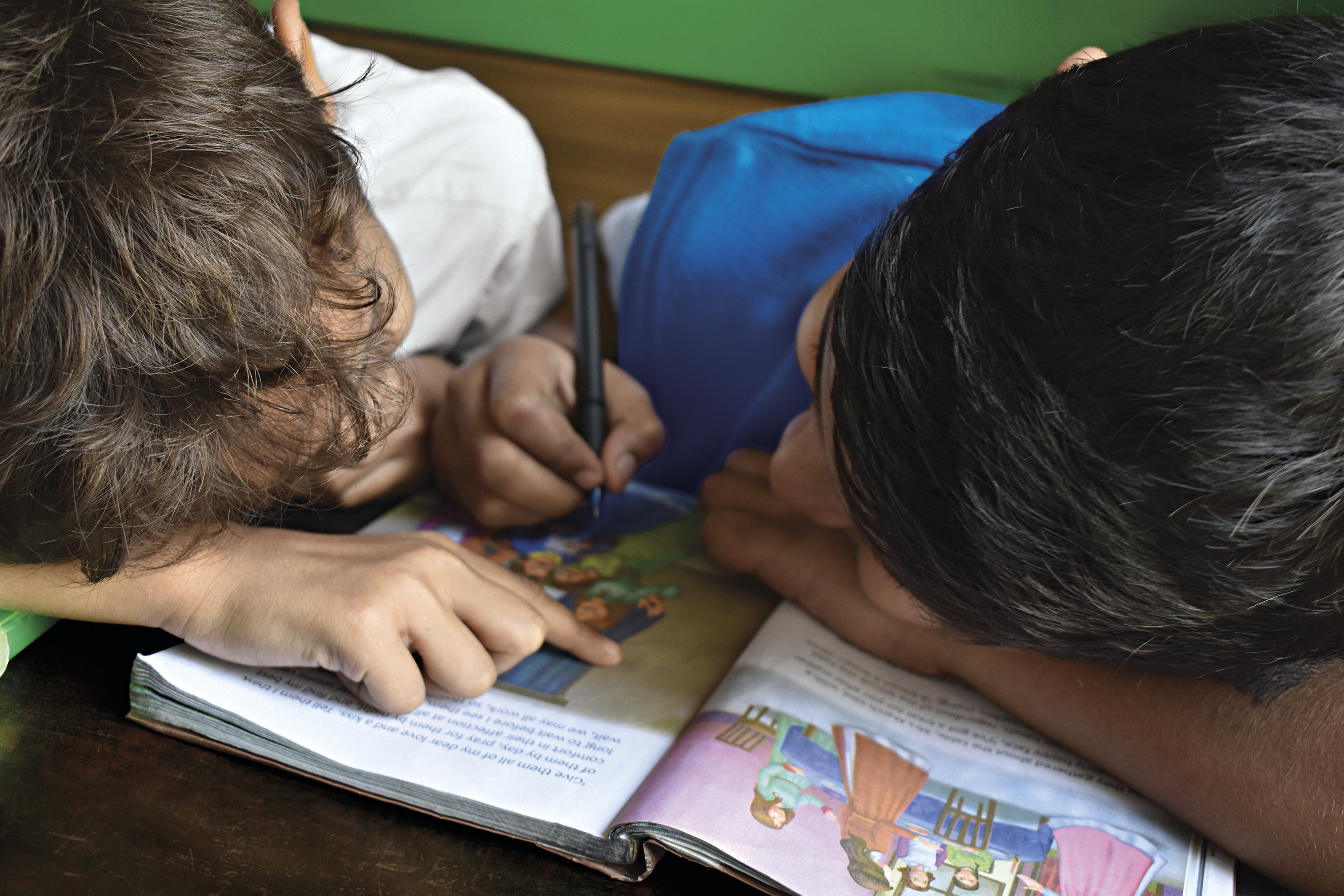
Increase the Basic Education Development Index (IDEB) by 40% in all priority municipalities by 2030.


Promoting diversity, equity and inclusion
Achieve 30% women in leadership positions; achieve 30% Black People in leadership positions; ensure a 100% inclusive environment...