



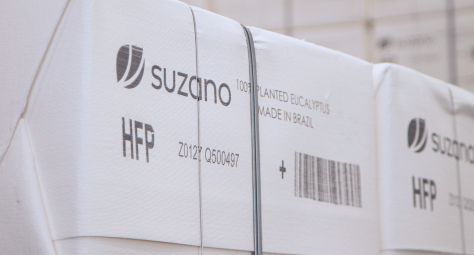


Responsible social and environmental conduct and the generation of shared value are part of Suzano's business strategy. The company recognizes the value of its forests, both in conserving its natural resources and in supplying sustainable eucalyptus wood—its main raw material.
Considering this to be a basic premise for any initiative in the face of biodiversity loss, Suzano is committed to a policy of zero deforestation (since July 2020) and the adoption of best forest management practices. It has established its eucalyptus plantations exclusively in areas previously anthropized by other uses and is promoting the improvement of the environmental quality of areas earmarked for conservation.
Zero deforestation for Suzano means that no eucalyptus is planted or acquired in areas previously occupied by native vegetation that have been deforested, legally or illegally, as established in its Wood Supply Policy. The company only uses planted forests in its production process, and natural forests are earmarked for conservation.
To ensure that deforestation is not present in its value chain and to fulfill its Commitment to Zero Deforestation, in addition to providing transparency of its activities for stakeholders, Suzano has been publishing the Zero Deforestation Annual Report since 2020 (2020, 2021, 2022 and 2023), based on a systemic analysis of public data on deforestation in Brazil and information from its operational base.
The company is guided by legislation, standards, and commitments and is committed to forestry initiatives that are widely recognized internationally [Forest Stewardship Council® (FSC®) and Programme of Endorsement for Forest Certification (PEFC)]. Additionally, to monitor Brazilian municipal, state, and federal regulations and maintain contact with stakeholders for risk mapping and decision-making, the company relies on specific software that supports analysis and decision-making.
Land use management and planning are key to ensuring compliance with the European Union Deforestation Regulation (EUDR). Implementing effective land use practices allows companies and producers to monitor and track their production areas, providing transparency and sustainability of their operations. In addition, compliance with the EUDR helps protect valuable ecosystems and strengthens companies' reputations on the global market by promoting responsible and sustainable business practices.
Suzano's operations are currently located in the states of Bahia, Espírito Santo, Maranhão, Mato Grosso do Sul, Minas Gerais, Pará, São Paulo and Tocantins, covering the Amazon, Cerrado, Atlantic Forest and Pantanal biomes.
To evaluate the areas of forestry producers and wood suppliers, Suzano has a Due Diligence System (Verification Program), which is a set of activities to monitor the sources of raw materials (wood) to comply with voluntary forest certification requirements, the company's internal policies, and applicable legislation.
The program covers 100% of wood suppliers, and the contracts include clauses on compliance with current legislation. Clients, investors, and internal and external auditors of voluntary forest certification standards evaluate all this control.
We invest resources in projects that help achieve our commitment to lifting people out of poverty. Suzano promotes family farming initiatives for priority communities, strengthening supply networks. These include projects such as sustainable flour mills and other social impact initiatives.
Therefore, when purchasing wood for its production processes, the company follows these principles:
- Comply with all applicable legislation and binding international agreements;
- Do not convert native areas for commercial use after July 2020 (date of publication of Suzano's Wood Procurement Policy);
- Produce exclusively from wood from forest plantations;
- Do not compromise recognized areas of high conservation value;
- Identify the origin of the wood and ensure that the entire supply chain is traceable;
- Respect the right to property, peaceful possession and use of land;
- Respect human rights;
- Ensure the civil rights of workers, including issues related to health and safety, observing the fundamental principles of the International Labor Organization (ILO);
- Guaranteeing the rights of Indigenous peoples and traditional communities;
- Ensure that forestry and timber supply operations do not cause deforestation;
- Carry out field visits to demonstrate documentary compliance.
Suzano's Integrated Risk Management also evaluates the assessment, monitoring, and compliance with regulatory issues. It also complies with the certification mechanisms focused on this issue, namely FSC®, and PEFC, which attest to the company's conduct in the development of forest products, respecting the environmental, social, and economic aspects of the region. Suzano is audited annually based on pre-established and public environmental, social, and financial performance standards in these cases.
Recognizing the potential impact of its operations on forests and other natural habitats, the company's Corporate Environmental Management Policy establishes a risk assessment for each activity carried out based on the theory of the mitigation hierarchy and determines measures for the prevention, mitigation, adaptation, restoration, and compensation of adverse impacts, as well as the amplification of beneficial effects.
Suzano believes that a fairer and more sustainable world is built on the transformative attitudes of society as a whole. That is why it invests in social development in its areas of operation. Its social strategy aims to promote social development in the company, which operates by strengthening community relations and investing in education and opportunities for work and income alongside its partners.
The relationship programs are based on a community engagement methodology, which represents a deeper, more inclusive, and continuous structured relationship and establishes Suzano as a partner in local development. In practice, this is done by organizing a cycle of structured dialogues, the objectives of which are to share information, define short—and long-term goals, and establish the actions and responsibilities of the parties involved.
The programs are born out of local vocations and needs. To boost the local development of neighboring communities, Suzano carries out various work and income, culture, sports, and education programs and initiatives for rural, urban, traditional, and Indigenous communities. Some examples are the Colmeias Program and the Sustainable Extractivism Program.
Additional information
Suzano does not use natural forest areas for timber production. These areas are designated for environmental conservation. Currently, the company maintains and protects more than 1 million hectares of native vegetation, corresponding to around 40% of its total area.